
Promotion of Education and Professional Enrichment
Where educators collaborate to advance the mission of leading and learning
Where educators collaborate to advance the mission of leading and learning

I started school when I was four years old. I walked every day to and from school with my mom always passing the uneven sidewalk, always walking ahead of her. My mom and my dad spoke Spanish, nothing more; school was just as new for me as it was for them. They were lost and confused, really hoping that someone who spoke Spanish would be a
I started school when I was four years old. I walked every day to and from school with my mom always passing the uneven sidewalk, always walking ahead of her. My mom and my dad spoke Spanish, nothing more; school was just as new for me as it was for them. They were lost and confused, really hoping that someone who spoke Spanish would be at my school to help them. I didn’t know a single English word except “hi” and “goodbye.” I met my first teachers, the teachers that gave me a way to connect with the world. They taught me the English language, and along with a little bit of PBS kids at home, I now knew more than just single words. Now I knew how to say, “need food,” and “my parents and I went to La Morazán grocery this weekend” when it was time to share during circle time.
I carried this new language with me as I attended new schools, moving often. I had ESOL teachers every year, and one of my ESOL teachers realized that she had me and my sister as her students. She asked me if I could teach my sister her sight words using flashcards and stickers that she provided. I was 11 years old giving my first lesson on the living room floor in our apartment with my sister sitting across from me. She was listening to me, processing, and applying. I realized in this moment that I was passing down what every teacher in my life had built in me.
My experiences have allowed me to proceed in reaching a higher education, something that my parents were not lucky to have. My career goal is to become an elementary education teacher and to get to hear my students call me Ms. Gonzales. Within this goal, I am going to build connections with families and make resources accessible by translating them in Spanish and other languages. School nights that emphasize sharing culture are something that I will advocate for and host. Another career goal is to go to different countries to teach children English, giving
back the gift of language that my teachers gave to me. I understand the challenges that Latino children have or any child that comes from a household that is not an English speaker because I once lived with those challenges too. As a future educator I am going to take my experiences and use them to create a learning space for everyone, creating an equal learning opportunity for all my students regardless of barriers. Together me and my students will break those barriers.
Growing up as an English learner shaped my education and who I am. As the middle
child, I was the only one of my siblings to migrate with my parents to the United States, while
my older siblings remained behind in Honduras. At home, Spanish was the only language
spoken. English existed mainly outside my household, and I learned it for respon
Growing up as an English learner shaped my education and who I am. As the middle
child, I was the only one of my siblings to migrate with my parents to the United States, while
my older siblings remained behind in Honduras. At home, Spanish was the only language
spoken. English existed mainly outside my household, and I learned it for responsibility. From a
young age, I served as an interpreter for both my parents, interpreting adult conversations while
still trying to understand a language that wasn’t my native language.
Having high expectations from both parents often felt like a burden and not a support. I
developed tough skin early on and built a strong character that was consistently taken for
granted. Due to my language barrier, school became a place of frustration rather than
encouragement. I always hear, “What do you mean you can’t translate this? Why do I send you
to school?” I struggled to feel confident, understood, or capable of reaching my maximum
potential. By the time I graduated high school, I knew I did not want to continue my schooling. I
felt disconnected from learning and lacked the willpower to feel successful.
After high school, I earned my Medical Assistant Degree, which became a degree, rather
than a starting point for continuation education. Years later, after struggles and more struggles, I
landed a job in the educational setting. There, I learned about Special Education and witnessed
the impact that patience, advocacy, and understanding can have on students. For the first time, I
saw education as a tool for empowerment. That experience motivated me to want more for
myself and my future.
As an educator working with PK3 and PK4 students, I reflect on my journey as an
English learner. I understand how isolated you can feel in a classroom when you struggle with
the language, not understanding what is being expressed or what you would like to say. I strive to
utilize my lived experience to be an educator who shows empathy, advocates for their needs, and
relates to them.
English is not an easy language to learn, but with patience and a loving, caring educator,
the journey becomes more manageable, guided by understanding, encouragement, and belief. My
personal challenges have shaped my commitment to education and my desire to continue
learning, enabling me to serve students better while building a meaningful future for myself.

This 2nd annual event will unite leaders from various districts to focus on Career Pathways, Financial Planning, Self-Care, and Entrepreneurship. This diverse group of leaders will network and learn how to prepare for “what’s next” in their respective lives.
This is your chance to dive into the heart of issues that affect you personally. You will gain valuable insights from leaders who have successfully navigated careers similar to what you currently do or aspire to do.


The School Club has identified Ninsy Arias Enamorado, an applicant for the 1st Vincent E. Reed School Club Scholarship, as one of two runner-ups to receive a one-time gift of $1,000.00.
Join us as we congratulate Ninsy Arias Enamorado, a junior majoring in Early Childhood and Special Education
The School Club has identified Brianna Smith, an applicant for the 1st Vincent E. Reed School Club Scholarship, as one of two runner-ups to receive a one-time gift of $1,000.00.
Join us as we congratulate Brianna Smith, a junior majoring in Elementary Education.
At the turn of the 20th century, a group of nine educators in the Colored Public Schools of the District of Columbia would gather together to socialize and play whist together. These men were: H. L. Bailey; J.C. Bruce; R. C. Bruce; F. L. Cardozo; W.T. S. Jackson; A.P. Lewis; J. C. Nalle; J. E. Syphax; and J. E. Walker.
On May 4, 1907, several of the founding members and others gathered together at the Garnet School to form a professional social club. They called the new organization, The School Club.
William Tecumseh Sherman Jackson, who had followed Francis L. Cardozo as Principal of the M Street School, was elected as the first president. He determined that at each meeting, along with social activities, time would be devoted to discuss current educational issues. A review of these discussions and exchanges among club members surfaced a common continuing goal: the improvement of the quality of education for Negroes in Washington, D.C. The achievement of this goal was especially significant during this period when Washington, D.C. operated a segregated school system. This practice continues today and discussions/presentations have been expanded to include current trends, developments and changes in Washington, D.C., the metropolitan area, and the educational arena.
In June 2013, two women educators were invited to join The School Club, thus amending the one hundred and six year tradition of having an organization exclusively for men. The two women, Dr. Floretta Dukes McKenzie, a retired superintendent of DC Public Schools and Charlotte Jarvis-Cureton, a retired administrator of DC Public Schools. Anita Berger was elected the first female president in 2021.
DCPS has recognized the special contributions of some of the members of The School Club by naming the following schools for them:
Similarly, one of the city libraries is named after Francis A. Gregory. In addition, several School Club members have provided leadership to the District of Columbia Public Schools and other jurisdictions. They are:


The Middle School Master:
A Practical Guide to Improve Student Achievement and Teacher Performance by Dr. Mark King is a research-based resource for school leaders. It offers practical solutions for building effective master schedules, enhancing staff capacity, and improving organizational strategies in middle schools, according to Amazon.in and Amazon UK
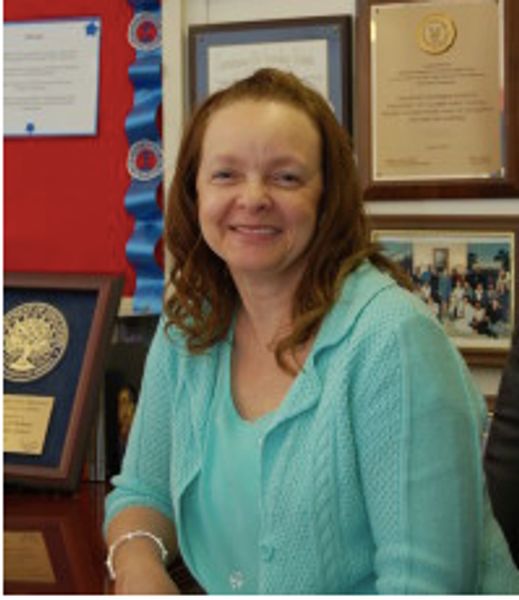
Born and raised in Washington D.C., Anita Berger became Benjamin Banneker Academic High School’s principal in 2005. Under her leadership, the school introduced the International Baccalaureate Diploma Program and achieved a 100% graduation and college acceptance rate. Berger’s commitment to quality education has earned her prestigious awards and national recognition, including the 2009 NASSP D.C. Principal of the Year award, the 2013 Rubenstein Award for Highly Effective School Leaders and the 2017 D.C. Public Schools Principal of the Year award.
Behind every successful organization lies a great leader. Someone that sets a good example; that challenges others to do their very best and won’t let them give up; someone that empowers, is firm but fair; and cares about others and how they are doing, all while remaining humble. All of those traits and more can be said regarding Principal Anita Berger of Benjamin Banneker Academic High School in Washington, D.C.
Benjamin Banneker high school is an alternative public institution of secondary education, where students in grades 9-12 are engaged in rigorous and varied academic experiences. The environment of the school is designed to provide students with a highly structured college preparatory program. Before graduating, every student must complete 270 hours of community service, which often serves as job training. And the curriculum of the school affords opportunities for developing knowledge, talents, and skills needed for success in post-secondary experiences.
Principal Berger, who arrived at Banneker after teaching at Howard, says, “Here at Benjamin Banneker we try to make global citizens. We have very strict guidelines that must be adhered to as far as dress code, no cellular devices, and other rules to assure that there are no distractions that would interfere with the students learning process. Our goal is that 100% of our students are successful, become high school graduates, and are accepted to college.”
Dr. Mark King has over 30 years of experience in public education serving as a middle and high school principal in Prince George's County, Maryland for several years before joining DCPS in 2010. In his position as Instructional Superintendent, he supervised the public middle schools across Washington, DC, for 5 years. During his tenure, the middle schools outpaced every other urban district in NAEP scores and in TUDA scores. In 2015, he was promoted to the position of Deputy Chief of Operations and Programs. He led the overall operations of the system, which included security, food services, facilities, and after school programs.
He is a former K-8 principal supervisor of 13 schools, in Baltimore City, where he led 2 schools out of possible reconstruction by MSDE. He has presented across the country at several conferences including the Council of Great City Schools, Men of Color in Educational Leadership, National Alliance of Black School Educators, BOOST and Beyond School Hours.
Darryl L. Williams was appointed superintendent of Baltimore County Public Schools (BCPS) on May 21, 2019, by the Board of Education of Baltimore County. He brought to BCPS decades of experience as an educator and administrator in Montgomery County Public Schools and District of Columbia Public Schools.
Highlights of Dr. William’s tenure with BCPS include:
Dr. Williams began his professional career as a mathematics teacher at his high school alma mater, Benjamin Banneker Academic High School. He then began a 25-year tenure with Montgomery County Public Schools as a mathematics teacher. He was promoted and successfully served as principal of three high schools, and ultimately rose to an associate superintendency. As associate superintendent, he and his directors supervised eight high schools, two specialty schools, 15 middle schools, and 44 elementary schools.
With more than 30 years of experience in education, Dr. Williams has been honored for his work by many organizations. Most recently, he earned the NAACP Award for Educational Leadership Excellence from the Baltimore County Branch; Kappa Alpha Psi Fraternity Inc., Baltimore Alumni Chapter Award; 2021 Innovation in Education Award from the Education Foundation of BCPS; and the Northeastern Region of Sigma Gamma Rho Sorority’s Notable Centennial Honoree Award in 2022.
Leonard A. Upson is an education consultant for leadership development with more than 35 years of experience as a teacher, coach, and administrator in urban school settings. Mr. Upson brings insights and skills in instructional leadership and organizational change and has received numerous awards for his endeavors including Junior High School Principal of the Year by D.C Public Schools in 1983, Principal of the Year by the District of Columbia Association of Secondary Schools in 1989, for his success in improving a school’s culture, climate, and academic outcomes for students within the schools he had lead K – 12.
Mr. Upson was also identified as a Principal of Excellence by the Washington Post in 1997 for improving the school climate, student test scores in reading and math at Calvin Coolidge High School which had been identified as a low performing school plagued with violence in 1993. After receiving a Leadership Degree from Harvard University, Mr. Upson served as a member of Harvard University’s Principals’ Center Staff for 15 years. This role spurred his development as a trainer, mentor and coach school and business leaders.
In 2002, Mr. Upson was chosen to serve as the Head of Schools for the Community Academy Public Charter Schools that served over 2,000 students on 5 Campuses. In this role he had the responsibility for providing leadership of all operations, the general administration, managing staff, enrollment, instruction, testing, safety and security, identifying needs, policies, p professional development, business and/or other operations while overseeing Day-to-Day operations.
A native of Washington, D.C., Mr. Upson earned a Master’s Degree in Urban Learning at George Washington University. His professional memberships include The School Club of Washington, National Association of Elementary School Principals (NAESP), National Association of Secondary School Principals (NASSP), Association for Supervision & Curriculum Development, 100 Fathers Inc., and Omega Psi Phi Fraternity, Inc. He currently serves as Director for Leadership Development with Capstone at Howard University. Additionally, In October 2013 Mr. Upson was certified by the National Association of Elementary School Principals (NAESP) and Gallup as a Mentor and Coach for elementary and secondary principals.
In the year 2013, Mr. Upson became the Chief Operating Officer (COO) for the Inner Voices, Inc. to plan, coordinate, manage and implement a safe and secure environment for women who have been victims of Domestic Violence who reside at the Freddi House. All women are referred, to the Freddi House, by the Crime Victims Compensation Program located in Washington, DC. Lastly, in 2018, Mr. Upson created a 501(c)(3), not-for-profit, to provide “Jobs for Women” who are victimized by Domestic Violence to enable them to become financially stable. Research has shown that financial instability is the number one reason why abused women return to their abusers.
Maria Tukeva, principal of Columbia Heights Education Campus (CHEC), was named District of Columbia Public Schools Principal of the Year, DCPS under Chancellor Kaya Henderson.
“A veteran educator with more than 30 years experience as a school leader, Maria Tukeva has proven her ability to guide and motivate students and teachers at what she describes as a ‘small city’ at Columbia Heights Education Campus,” said Chancellor Henderson. “By setting ambitious goals for her school community, Columbia Heights made some of the highest DC CAS gains in the district during the 2010-2011 school year— nearly 15 percent in math and 12 percent in reading.”
Thirty-one years prior, Principal Tukeva founded the school now known as CHEC (originally called the Multicultural Career Intern Program) as an alternative school. She recognized that children who were learning English faced academic challenges that put them at a disadvantage. Nonetheless, she set high expectations for her students and continues to push her students to reach their academic potential.
“I have to keep thinking about what envelope to push next, what challenge we must overcome,” Tukeva said.
It is this foresight that has taken CHEC from a 40-student campus at its inception to a thriving school, complete with a daycare center and resources for families in the Columbia Heights community.
With a student body of about 1,300 students, Tukeva gets to know each one and stays visible throughout the school day, visiting classrooms, the cafeteria, and the library to spend time with her students and staff.
Tukeva was honored at “A Standing Ovation for DC Teachers at the John F. Kennedy Center for the Performing Arts”. This was the second-annual event, featuring Grammy Award-winning recording artist John Legend and other national and local celebrities.
For more information about A Standing Ovation for DC Teachers, visit http://www.standingovationfordcteachers.org/